
Improve your browsing experience with our cookies
We use cookies to give you the best experience on our site. You can find out more about the cookies we use or disable them in the cookie settings.
Spanish Long-Distance Runner
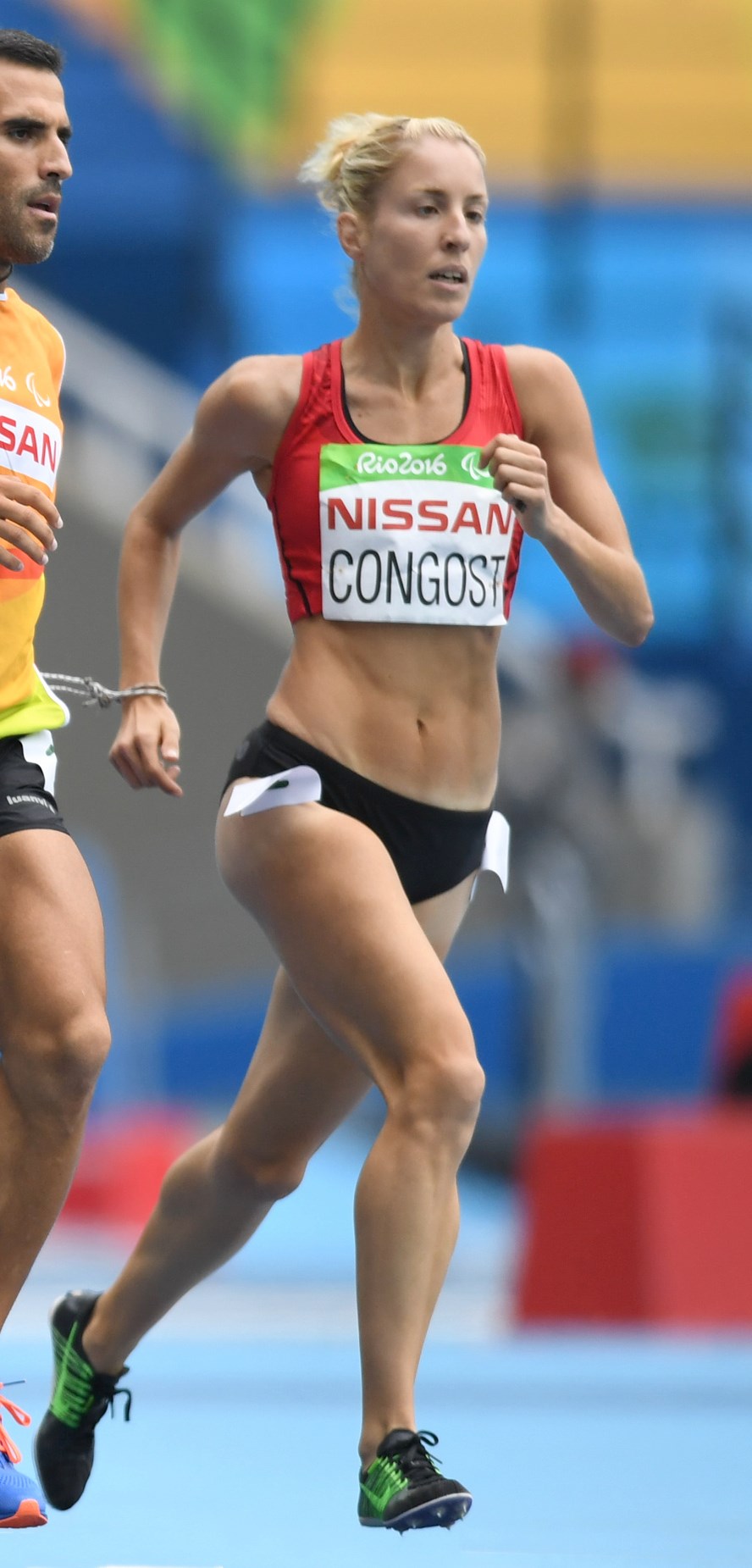
Elena Congost is a Spanish T12/B2 long‑distance runner who has become one of Europe’s leading visually impaired athletes, combining elite sporting success with a powerful story about the rules and economics of modern Paralympic sport. A Paralympic silver medallist in London 2012 and gold medallist in Rio 2016, she has also set the European record in the T12 marathon, confirming her status as a benchmark in her category. Mother of four and a trained teacher, she has pursued her athletic career with only around 5% vision, running with a guide in all major competitions.
At the Paris 2024 Paralympic Games, Elena Congost crossed the line third in the women’s T12 marathon, apparently securing bronze, before being disqualified for briefly releasing the tether that linked her to her guide, Mia Carol Bruguera, to help him when he suffered severe cramps just metres from the finish. World Para Athletics applied a strict liability rule on permanent tether use, and the International Paralympic Committee confirmed the disqualification, stripping her of the medal despite the fact that the fourth‑placed runner was several minutes behind.
The decision has had immediate legal and economic repercussions. Elena Congost has appealed within the sports system and is now preparing court action, challenging the proportionality of the rule and the rigidity of its enforcement. Financially, losing the bronze initially meant forfeiting around €30,000 in prize and grant income and jeopardising her monthly support, although the Spanish Paralympic Committee, under public pressure, promised to treat her as a medallist for funding purposes while the case is pending. Her situation illustrates how eligibility rules, classification regulations and funding criteria decided by international bodies and national committees can determine not only an athlete’s medal record, but also their livelihood.
Elena Congost’s case has resonated far beyond Spain, fuelling a broader debate on the governance of Paralympic sport: the balance between athlete welfare and formal compliance, the transparency of decision‑making by the IPC and World Para Athletics, and the limited avenues athletes have to challenge decisions that hinge on highly technical rules applied in emotionally charged circumstances. As she continues to train and litigate in parallel, Elena Congost has become a reference point in discussions on how law, economics and ethics intersect in global Paralympic governance.
The combination of the best academic professors and renowned active experts in Law, Economics and Geopolitics in sports is the ideal formula for you to be in contact with professional and up-to-date reality.
The pedagogical skills of the lecturers of this program, together with their knowledge and professional profile, are key to their selection in this educational team. And they ensure you the best possible training.